By Santosh Poudel ·
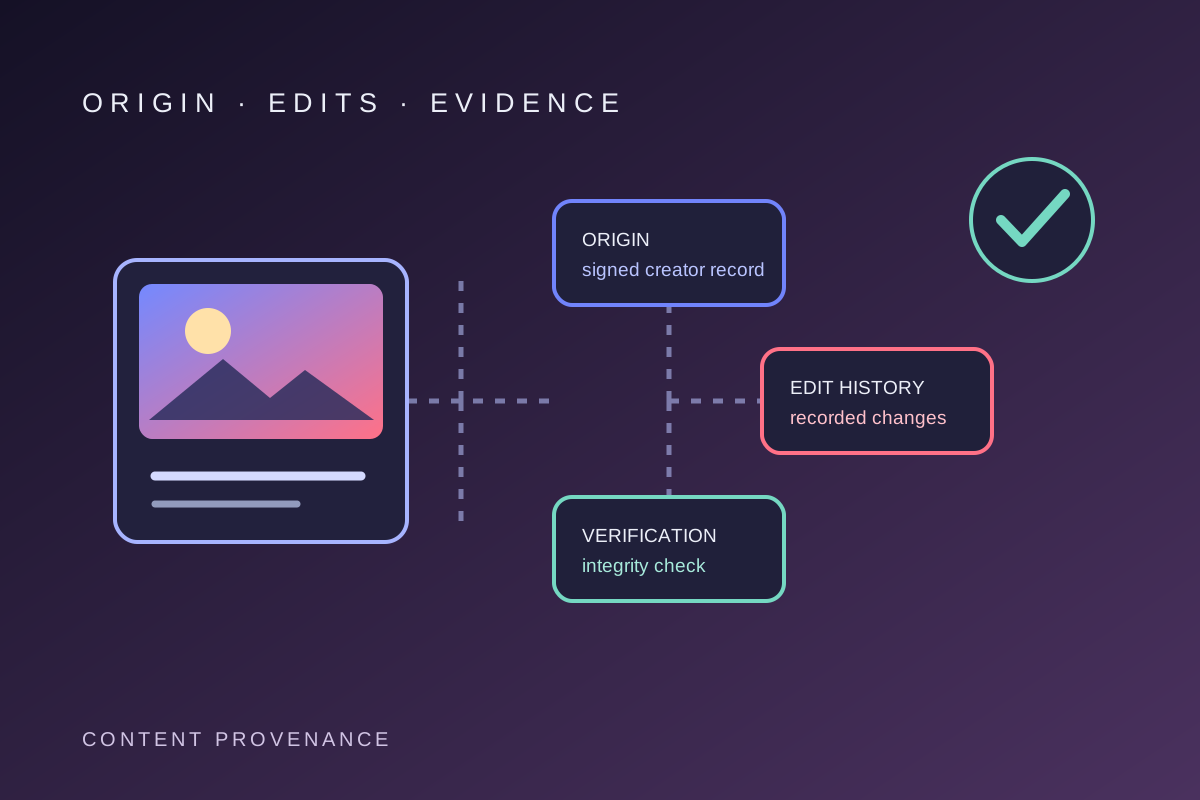
As AI-generated images and text become easier to make, people need better ways to understand where digital content came from. AI detection and blockchain are often proposed as solutions, but neither one alone proves who created a file or whether its claims are true.
Detection is not the same as provenance
An AI detector estimates whether content resembles examples produced by a model. Results can be uncertain and may change as tools and editing methods evolve. A detector cannot reliably reconstruct the full history of a file from appearance alone.
Provenance records information about origin and edits. Cryptographic signatures can help show that recorded information has not changed since it was signed, but they still depend on trustworthy signing keys and accurate claims at the point of capture.
Where a blockchain might fit
A distributed ledger could timestamp or anchor a content record when several parties need to verify a shared history. It does not need to store the full image or video, and putting personal or sensitive data directly on a public chain can create serious privacy and deletion problems.
Standards such as C2PA describe ways to attach signed provenance information to media. These credentials can be useful evidence when present, but missing credentials do not prove that content is fake, and credentials do not certify that the content itself is truthful.
Use multiple signals
For a careful assessment, check the original publisher, look for a verifiable content history, compare independent reporting and treat automated detection as one limited signal. Keep uncertainty visible rather than turning a score into a verdict.
This is the problem space behind my work on VerifiAI: making content checks easier to use while being clear about what a tool can—and cannot—establish.